
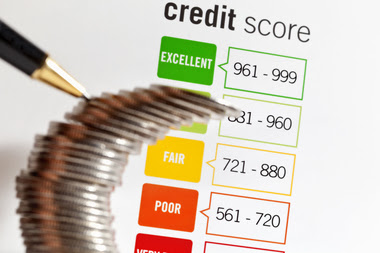
Your FICO credit score tells lenders how well you’ve managed your credit and paid your bills in the past. The higher your score, the more likely you are to qualify for a mortgage with a lower interest rate. This is important: The lower your interest rate, the lower your monthly payment will be.
Lenders consider a FICO score of 740 to 799 to be “very good” and one of 800 or higher to be “exceptional.” You want a score in these ranges if you want the lowest interest rate.
The best way to build a strong credit score is to pay your bills on time and pay off as much of your credit card debt as possible.
And you must avoid the following three credit killers:
Paying certain monthly bills late
Your lenders and creditors report certain payments to the national credit bureaus of Experian, Equifax and TransUnion. These include your minimum monthly credit card payment and your mortgage, auto, student and personal loan payments. Paying these on time each month will boost your credit score.
But if you pay these bills late? Your lenders and creditors will report that, too. A single late payment can cause your credit score to fall by 100 points or more.

There is some leeway here. Your lenders won’t report your payment as late until you are at least 30 days past its due date. If you are two weeks late on your auto loan payment? Pay it before you hit the 30-day mark to avoid a late payment notice on your credit reports.
Late payments remain on your credit reports for seven years. Lenders, then, will see them every time you apply for a loan or credit card. That could hurt your chances of qualifying.
Foreclosures
If you miss your mortgage payments, your lender could foreclose on you, evicting you from your home and taking over ownership of it.
Foreclosing on a home will also devastate your credit score, causing it to plummet by 100 points or more. And like late payments, a foreclosure notice remains on your three credit reports for seven years.
If you are struggling to keep up with your mortgage payments, reach out to your lender immediately. Your lender can work out a payment plan that you can afford, something that might keep you from falling into foreclosure.
Bankruptcy filings
Another killer for your credit score? Filing for bankruptcy. Like foreclosures and late payments, a bankruptcy filing will cause your credit score to fall by 100 points or more.
Bankruptcy filings also remain on your credit reports for a long time. A Chapter 13 bankruptcy filing remains on your credit report for seven years, while a Chapter 7 filing remains for 10 years.
Bankruptcy can be a financial lifeline for consumers overwhelmed with debt. Just know that filing for this protection can make it challenging to qualify for a mortgage loan. For many mortgage types, you may need to wait two to four years before you can apply for a new loan.
